How Cooking Creators Can Post More Consistently Without Burning Out
The biggest reason cooking creators fall off their posting schedule isn't a lack of ideas — it's the edit. Here's how to fix the bottleneck and show up consistently.
How Cooking Creators Can Post More Consistently Without Burning Out
Ask any cooking creator what’s holding back their posting consistency and they’ll almost never say “I don’t know what to cook.” The ideas are usually there. The recipes are there. The kitchen is there.
What’s not there — or what takes forever — is the edit.
Food content looks deceptively simple to make. A recipe, some nice lighting, a clean countertop. But the reality is that a single 60-second Reel might represent 30–45 minutes of raw kitchen footage: multiple takes, ingredient swaps, re-shots because the steam obscured the shot, moments you want to save but aren’t sure where they fit. Getting from that pile of footage to a finished short-form video is where most cooking creators lose hours of their week.
Here’s how to close that gap.
The Real Reason Cooking Creators Fall Off Their Schedule
Burnout for cooking creators usually follows a predictable pattern:
- You film a bunch of content on a good day
- You fall behind on editing because it takes too long
- You start feeling guilty about the backlog
- The backlog makes you dread creating
- You post less, which hurts your growth, which reduces motivation
The shoot is rarely the problem. The bottleneck is almost always the edit — specifically the gap between raw footage and a finished, postable video.
The solution isn’t to film less. It’s to get through the edit faster.
Tip 1: Batch Film, Then Batch Edit
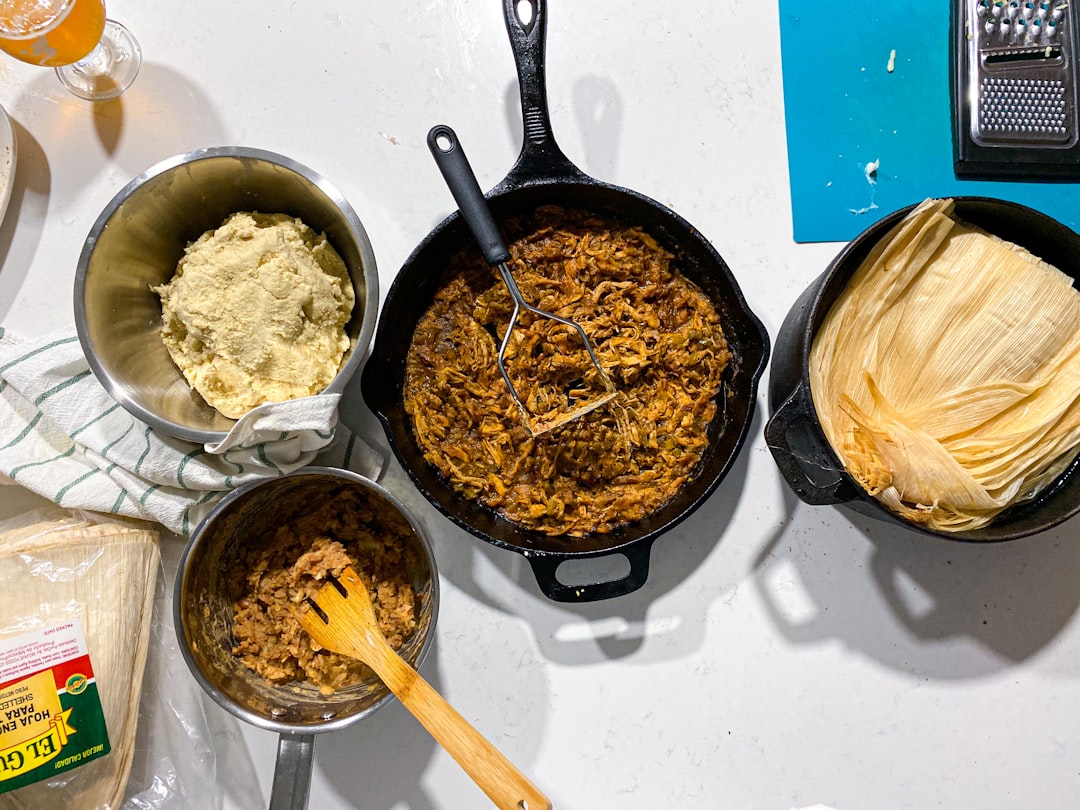
The most effective schedule for cooking creators is to treat filming and editing as completely separate days.
Pick one day a week (or every two weeks) as your filming day. Cook three, four, or five recipes back-to-back while the camera is set up. Don’t think about the edit. Just capture. You’ll be more efficient with your kitchen prep, your lighting won’t change mid-day, and you won’t context-switch between “creative mode” and “technical mode.”
Then pick a separate day for editing — ideally not the day after filming, when you’re still close to the footage and prone to overthinking it.
This separation alone dramatically reduces the mental overhead of content creation.
Tip 2: Stop Trying to Capture Everything Perfectly
A lot of cooking creators slow themselves down by trying to get a perfect take before moving on. They re-shoot the pour because it wasn’t quite right. They re-plate because the garnish shifted.
Some of this is valid — visuals matter in food content. But there’s a point where perfect becomes the enemy of posted.
The more practical approach: shoot the action multiple times and pick in the edit, not on the day. A slightly imperfect pour with great lighting is better than a perfect pour with stiff framing. Shoot fast, shoot varied, and let future-you decide what works. You’ll move through the recipe faster and end up with more options in the edit.
Tip 3: Build a Repeatable Shot List
Improvising your shots every time you film is a time sink. Build a standard shot list that you follow for every recipe — then adapt as needed.
A solid cooking shot list for short-form:
- Overhead ingredients flat lay before starting
- Medium shot of the cooking action (stirring, sautéing, mixing)
- Close-up details — steam, texture, bubbling, pouring
- Plating sequence (overhead and 45° angle)
- Final hero shot of the finished dish
- Taste reaction (optional but high-engagement)
With a consistent shot list, you stop improvising and start executing. Filming gets faster, and editing gets easier because you always have the same types of clips to work with.
Tip 4: Embrace the Imperfect Cut
The difference between posting twice a week and posting twice a month is often perfectionism in the edit.
Audiences for cooking content care most about the visual experience — the beauty of the dish, the satisfying sequence of cooking moments, the appetite appeal. They’re far more forgiving of an imperfect cut or a slightly awkward transition than most creators expect.
Set a time limit for each edit. If you’re making short-form content, a reasonable rule is: spend no more than one hour editing each 60-second video. If it’s not done at an hour, post it anyway. Most of what you think is “not ready” is already good enough.
Tip 5: Use AI to Handle the First Draft
The most time-consuming part of editing cooking content is pulling selects: scrubbing through all your footage, identifying the best takes, and arranging them into a rough structure. This can easily take 30–45 minutes before you’ve made a single creative decision.
AI tools like Clik are built to handle this step. Upload your raw cooking footage and the AI analyzes your clips visually — identifying the most compelling visual moments, understanding composition and motion, and assembling a first-draft timeline. You start from a rough edit, not a blank timeline.
For cooking creators specifically, this matters because food content is highly visual. The AI doesn’t need dialogue or narration to understand that a close-up of a sizzling pan is more interesting than a static wide shot of an empty counter. It reads visual quality, and it puts your best moments forward.
The result: you get to the creative decisions faster, spend less time on the mechanical parts of editing, and can realistically finish a polished short-form video in under an hour.
Tip 6: Create Content Themes to Reduce Decision Fatigue
One underrated reason creators lose momentum is decision fatigue: too many choices about what to make, how to make it, and how to frame it.
Giving yourself content themes reduces that load. Some examples:
- “5-ingredient” series — constraint-based recipes that are automatically simple and repeatable
- Day-of-week formats — “Weeknight Dinner” on Tuesdays, “Weekend Brunch” on Saturdays
- Seasonal ingredients — a natural organizing principle that never runs out
- Recreating restaurant dishes at home — built-in curiosity hook
A theme doesn’t mean you repeat yourself. It means you have a frame that makes the “what should I make today?” question easier to answer.
The Compounding Advantage of Consistency
In short-form content, consistency compounds. An account posting four times a week reaches the algorithm more often, surfaces to more followers, and builds audience habit. Viewers come to expect your content on a regular cadence — and that expectation drives engagement.
The goal isn’t to post every single day. It’s to post often enough that your audience knows you’re active, and your algorithm performance stays warm.
For most cooking creators, 3–5 posts per week is the sweet spot between quality and volume. With batch filming, a consistent shot list, and AI-assisted editing, that’s achievable without turning content creation into a full-time job.
The bottleneck is almost always the edit. Solve the edit, and the consistency follows.