Clik vs Eddie AI: A Rough Cut for Your Editor, or Finished Videos for Your Team?
Eddie AI hands your editor a rough cut to finish. Clik hands your team finished videos. Two different answers to who does the last mile.
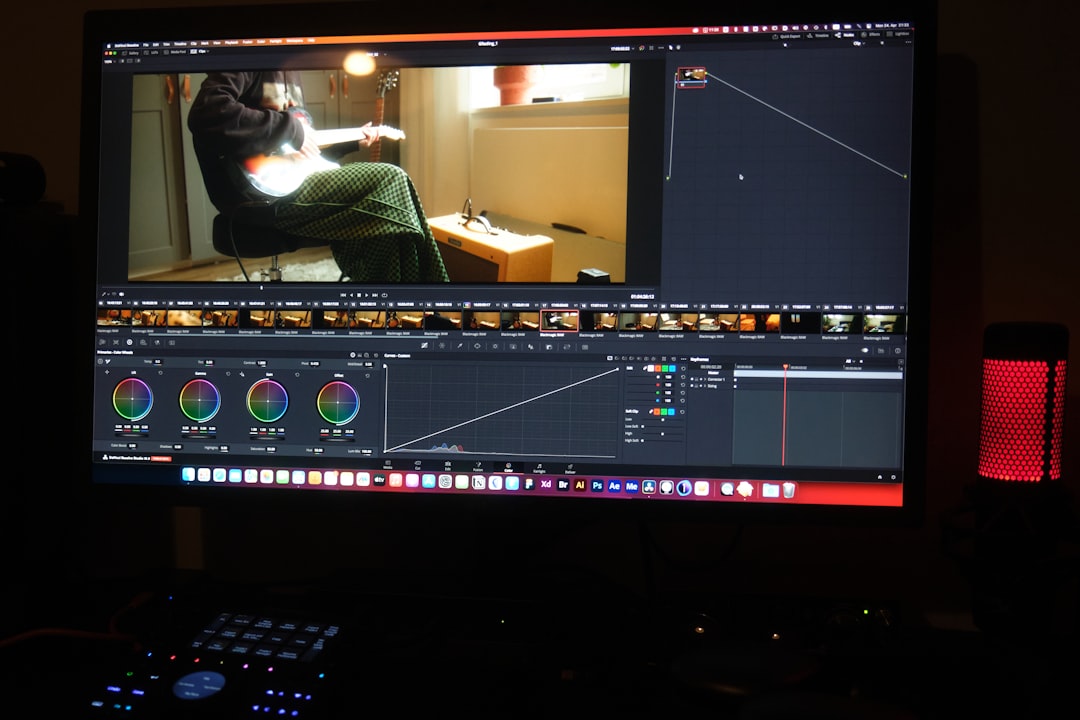
Clik vs Eddie AI: A Rough Cut for Your Editor, or Finished Videos for Your Team?
Most comparisons in this category are secretly about the same question: can the tool handle raw footage at all? Almost everything on the market takes a finished file, one exported episode, one uploaded MP4, and works downstream from there. Point it at a folder of camera originals and it has nowhere to begin.
Eddie AI is the exception, and it’s a real one. Eddie ingests a multi-file raw shoot, watches it, logs it, and produces something usable out the other side. So does Clik. That makes this the rare comparison where the starting point isn’t the story.
The story is what comes out, and who’s standing there waiting for it.
What Eddie is built for, and it’s built well
Eddie automates the assistant editor’s job, and that job is genuinely hard.
Think about what an AE actually does on a shoot with sixty files. They watch all of it. Every take, every restart, every roll where the subject flubbed the line and went again. They log what’s in each clip, who’s talking, what’s happening, what the b-roll shows. They mark the takes worth using. Then they assemble a string-out: the raw material laid down in a rough order so that when the editor sits down, they’re starting from a structure instead of a bin.
That’s hours of unglamorous, high-judgment work that gates everything downstream. Eddie does it. It reviews and logs raw multi-file footage, applies computer vision to catalogue b-roll, and builds a rough cut the editor can open and start cutting against. There’s an async mode too, send the footage, get cuts back later, which mirrors how post teams already work with assistants across time zones.
It’s dialogue-driven by design. Eddie’s own documentation is upfront that it performs best where the audio is clear and there’s speech to anchor on: interviews, sit-downs, talk-driven material. That’s not a weakness, it’s a stated design center, and being clear about it is a sign of a serious product rather than a demo.
And you can tell who it’s for from how it’s sold. Eddie shows up in trade press and on the floor at NAB, not in creator marketing. Pricing sits meaningfully above consumer clipping tools, quoted per team rather than listed. It has a large and growing base of working editors, which is the hardest audience in this category to win. Editors are professionally skeptical of automation aimed at their craft. Eddie won them by aiming at the work around the craft instead.
Where the two diverge
Eddie’s output is an input.
The rough cut is designed to be handed to a professional and finished in an NLE, Premiere, Resolve, Final Cut. That’s the intended workflow, not a shortfall. The whole value proposition assumes there’s an editor downstream who will take the string-out and turn it into a piece. Eddie gets that person to a running start. What happens next is theirs.
Clik’s output is the deliverable.
Point Clik at a shoot, a podcast, or a folder of clips and it sorts the footage into separate projects. Not one project, several, because a batch day usually contains several unrelated concepts mixed together. It plans each one and builds them in parallel into finished videos: captioned, title-carded, paced the way your team paces things, hooked the way your team hooks things. B-roll comes from your own archive and shoot footage rather than a stock library. You get MP4s ready to post, or XML into Premiere, Resolve, or Final Cut if someone does want to touch them.
The difference isn’t quality of judgment. It’s where the workflow terminates.
Why that maps to a different buyer
A post house has an editor waiting. So does a production company, an in-house video department with a cutting room, a documentary team. For those orgs, the bottleneck is getting the editor to the good part faster. Every hour the AE spends logging is an hour the editor isn’t cutting. Eddie attacks exactly that hour.
An agency running batch days for six clients does not have an editor waiting. Neither does a media team that owes 100 shorts a month, or a clipping operation running volume across accounts. For them, a rough cut isn’t a head start. It’s another unfinished thing in the queue. Their bottleneck is that nothing gets to done without a person, and there aren’t enough people.
Neither org is better run. They have different constraints, and the tools reflect that honestly.
The go-to-market confirms it. Eddie is priced and sold for professional post: higher tiers, industry events, trade coverage, a buyer who evaluates tools against a staffed pipeline. Clik is self-serve with published pricing from $29/mo, because the buyer is someone who wants to run last week’s shoot folder through it this afternoon and see whether anything comes out finished.
Head to head
| Eddie AI | Clik | |
|---|---|---|
| Ingests raw multi-file shoots | Yes | Yes |
| Footage logging and review depth | Core strength | Functional, in service of the build |
| Assistant-editor workflow | What it’s built for | Not the goal |
| Intended output | Rough cut / string-out | Finished, ready-to-post videos |
| Who finishes the work | A professional editor in an NLE | The system |
| One batch → many separate projects | Not the design center | Core |
| Captions, title cards, on-brand pacing applied | Left to the editor | Built in |
| B-roll source | Logged from your footage, CV-catalogued | Your archive and shoot footage |
| Async “send footage, get cuts back” | Yes | Not the model |
| Style learned and reapplied across everything | Editor’s job | Core |
| Reusable guided workflows saved as skills | , | Yes |
| Handoff to Premiere / Resolve / Final Cut | Native to the workflow | XML export |
| Trusted by working editors | Strong, large base | Earlier |
| Pricing | Sold for professional post, quoted per team | Published, $29/mo to start |
Choose Eddie if
You have an editor. That’s most of it, honestly.
If there’s a person on your team whose job is to cut, and the thing slowing them down is the hours before the cut starts, the watching, the logging, the take selection, the string-out, Eddie is aimed directly at your problem and is very good at it. If your material is dialogue-led and well-recorded, you’re in its sweet spot. If you want b-roll catalogued rather than guessed at, that’s a strength. If your finishing happens in Premiere, Resolve, or Final Cut and you have no intention of changing that, Eddie’s handoff is native rather than an export step. And if you want a vendor that working editors already trust and that shows up where post professionals show up, that’s not a small thing.
If the output is a high-production or cinematic edit, something where a human is going to shape every cut anyway, Eddie is the better bet.
Choose Clik if
Nobody is waiting to finish the edit.
Your footage arrives in batches that contain several different videos mixed together. You need those separated, planned, and built: captioned, title-carded, on brand, and without a human pass in the middle. You have an archive worth cutting from. You have a house style you’d rather teach once than re-explain per project. And your obligation is a number of finished posts, not a number of started ones.
The honest close
If you have an editor, the right question is: what gets them to a finished piece fastest? Eddie is a strong answer to that question.
If you don’t have an editor, that question doesn’t apply. Yours is simpler and harsher: does anything get finished at all?
Point Clik at your last shoot folder and see what comes back, clik.vision.